

If your child often struggles to follow directions, you may wonder why everyday requests, such as getting dressed, putting toys away, or getting ready for bed, require so many reminders. While this can be frustrating, understanding why your child isn’t listening can help you find a more effective way to respond.
Children don’t always ignore instructions on purpose. Sometimes, they’re distracted by an activity, tired, or having difficulty understanding what you’re asking them to do. In other situations, they may struggle to manage their emotions or move from one activity to another.
Understanding what’s behind your child’s behavior is the first step toward helping them listen and cooperate. In this guide, we’ll explore eight common reasons children may have difficulty following directions, practical strategies you can try at home, and when early mental health intervention may be helpful.
Why Won’t My Child Listen?
Listening involves more than simply hearing what you say. Children also need to understand instructions, remember what to do, manage their emotions, and follow through. These skills develop over time, so younger children may need extra guidance and patience.
The reasons your child isn’t listening can also vary from one situation to another. For example, they might struggle to follow instructions during a busy morning because they’re distracted or unsure where to start. At bedtime, the same child might resist because they don’t want to stop playing or go to sleep.
So, instead of assuming your child is deliberately ignoring you, pay attention to when and why they have difficulty following directions. Understanding these patterns can help you identify what your child needs and choose strategies that make cooperation easier.
7 Common Reasons Your Child May Not Listen And What To Do
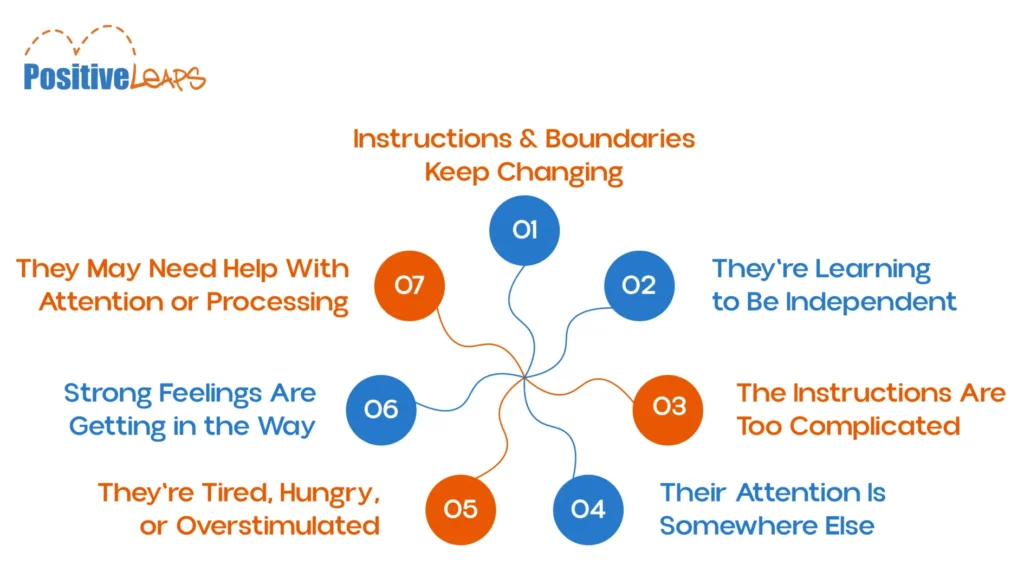
If your child doesn’t follow directions consistently, it helps to look beyond the behavior itself. They may be seeking independence, struggling to understand what you mean, or finding it difficult to manage their emotions.
Here are eight common reasons children may have trouble listening, along with practical ways you can help.
1. They’re Learning to Be Independent
As children grow, they naturally want more control over their choices. Your preschooler might insist on zipping their own coat, even when you’re running late. If you step in to help, they may protest or refuse to cooperate.
In these moments, your child may not be ignoring you on purpose. They may simply want to do things on their own.
What you can do: Offer choices while keeping expectations clear. For example, you could say, “It’s time to go. Would you like to carry your coat or wear it?”
This gives your child some independence without changing what needs to happen. You can also acknowledge their efforts when they cooperate. Approaches like positive reinforcement rather than punishment can help you encourage positive behavior without relying on threats or punishment.
2. The Instructions Are Too Complicated
Telling your child to clean your room may seem straightforward, but they might not know where to start. Should they put away their toys first, pick up their clothes, or organize their books?
When instructions involve several steps, children can become confused or overwhelmed. What looks like refusal may actually mean they need help understanding what to do.
What you can do: Break larger tasks into smaller, specific steps. Instead of saying, “Clean your room,” try, “Please put your books on the shelf.”
Give your child time to finish before introducing the next task. For older children, a short checklist can make multi-step instructions easier to follow. If they still struggle to get started, demonstrate the first step together, then encourage them to continue independently.
3. Their Attention Is Somewhere Else
Have you ever asked your child to do something while they’re absorbed in a puzzle, playing with toys, or watching a show? If they don’t respond, they may not have fully heard or processed your request.
Children can find it difficult to shift their attention from an activity, particularly when they’re enjoying it. Calling out instructions from another room may not be enough to get their attention.
What you can do: Move closer and say your child’s name before giving a clear instruction. Allow them a moment to pause their activity, and check that they’ve heard you without insisting on eye contact.
For example, you could say, “Sam, please pause your game and wash your hands before dinner.”
If background noise is competing with your voice, turn down the television or move to a quieter space. Getting your child’s attention first can make your request easier to understand and follow.
4. They’re Tired, Hungry, or Overstimulated
Children have to manage many demands throughout the day, from following classroom rules to interacting with others and coping with changes in routine. By the time they get home, they may be tired, hungry, or overwhelmed.
When this happens, even familiar tasks can become harder. Your child might usually get dressed without difficulty but become uncooperative after a long day.
What you can do: Notice when your child has the most difficulty following directions. Does it happen after school, before meals, or around bedtime?
When possible, offer a snack, some quiet time, or a short break before asking them to complete a demanding task. For example, you could give your child 10 minutes to relax after school before starting homework.
You won’t always be able to postpone a task, but adjusting the timing and giving your child a chance to recharge may make cooperation easier.
5. Strong Feelings Are Getting in the Way
Children don’t always know how to handle disappointment, frustration, or anger. When these feelings become overwhelming, they may struggle to listen or respond calmly.
For example, your child might be looking forward to a trip to the park, only to find out that rain has forced you to cancel. They may start shouting, crying, or refusing to do anything else you ask.
In this situation, lengthy explanations may not help while your child is still upset.
What you can do: Acknowledge your child’s feelings while keeping reasonable boundaries. You might say, “I know you were excited about going to the park. It’s disappointing that we can’t go today.”
Give them some time to settle before discussing what to do next. You can offer comfort without changing a decision that needs to remain in place.
If intense reactions happen frequently or interfere with everyday routines, learning more about emotional outbursts in children may help you understand what your child is experiencing and when additional support may be useful.
6. They May Need Help With Attention or Processing
Sometimes, children have difficulty following directions even when they want to cooperate. They may struggle to remember instructions, understand certain words, process spoken information, or shift their attention from one task to another.
Hearing difficulties and developmental differences can also affect how a child responds to requests. These challenges may be mistaken for stubbornness when a child actually needs additional support.
Attention-deficit/hyperactivity disorder (ADHD) can affect a child’s ability to manage attention and impulses, making it harder to follow directions in some situations. According to the CDC, an estimated 7 million children in the United States, or 11.7% of children ages 3–17, had a current ADHD diagnosis based on parent survey data collected in 2024.
What you can do: Try giving one instruction at a time and showing your child what you want them to do. Visual reminders may also help them remember the steps involved in a task.
Notice whether your child responds more easily in quieter settings or when you simplify instructions. If difficulties persist or affect daily life, talk with your child’s pediatrician about whether to assess hearing, language, attention, or developmental concerns.
Sharing specific examples of when your child does and doesn’t respond can help guide that conversation.
7. Instructions and Boundaries Keep Changing
Consistency helps children understand what you expect from them. However, maintaining boundaries isn’t always easy, especially when you’re busy or your child keeps asking for more time.
For example, you might tell your child that screen time is over, then allow one more video after repeated requests. When this happens regularly, your child may begin to expect that the original limit is negotiable.
What you can do: Set realistic limits and explain them before the activity begins. You might say, “You can watch two videos. When they’re finished, we’ll put the tablet on the charger.”
If your child finds it hard to stop, remind them before screen time ends. When it’s time to put the tablet away, follow through calmly and consistently.
This doesn’t mean you need to be rigid in every situation. Rather, aim to make expectations predictable so your child knows what to expect.
If similar difficulties occur at school, speak with your child’s teacher to understand whether the same patterns appear in the classroom. The guide to behavior challenges at school offers additional suggestions for working with school staff.
When Should Parents Seek Professional Help?
Occasional resistance is a normal part of childhood. However, if your child consistently struggles to follow directions and these difficulties interfere with school, relationships, safety, or everyday family routines, it may be time to seek professional guidance. Watch for persistent distress or noticeable changes in your child’s mood, communication, or behavior.
According to the CDC, 21% of U.S. children ages 3–17 had a mental, emotional, or behavioral health condition identified by a health care provider in 2021. This highlights the importance of children’s mental and behavioral health, but difficulty listening alone doesn’t mean your child has a mental health condition.
If you’re concerned about your child’s behavior, start by speaking with their pediatrician. You can also explore the signs a child may benefit from behavioral therapy to better understand when additional support may be helpful.
At Positive Leaps, our Specialized Day Treatment program for children ages 3–8 supports children experiencing broader emotional and behavioral challenges by helping them develop emotional regulation, social interaction, and communication skills. A professional assessment can help determine whether this type of support is appropriate for your child.
If you’d like to learn more about available support options, contact the Positive Leaps team.
Helping Your Child Build Better Listening Skills
If you’re still wondering why your child won’t listen, remember that children have different needs, and their behavior can stem from different reasons. Watch for patterns, try one strategy at a time, and celebrate small steps toward improvement.
If listening difficulties continue to affect your child’s daily life at home or school, speaking with a child behavioral health professional can help you better understand their needs and explore appropriate next steps. With patience, consistency, and the right support, you can help your child develop stronger communication and cooperation skills.