
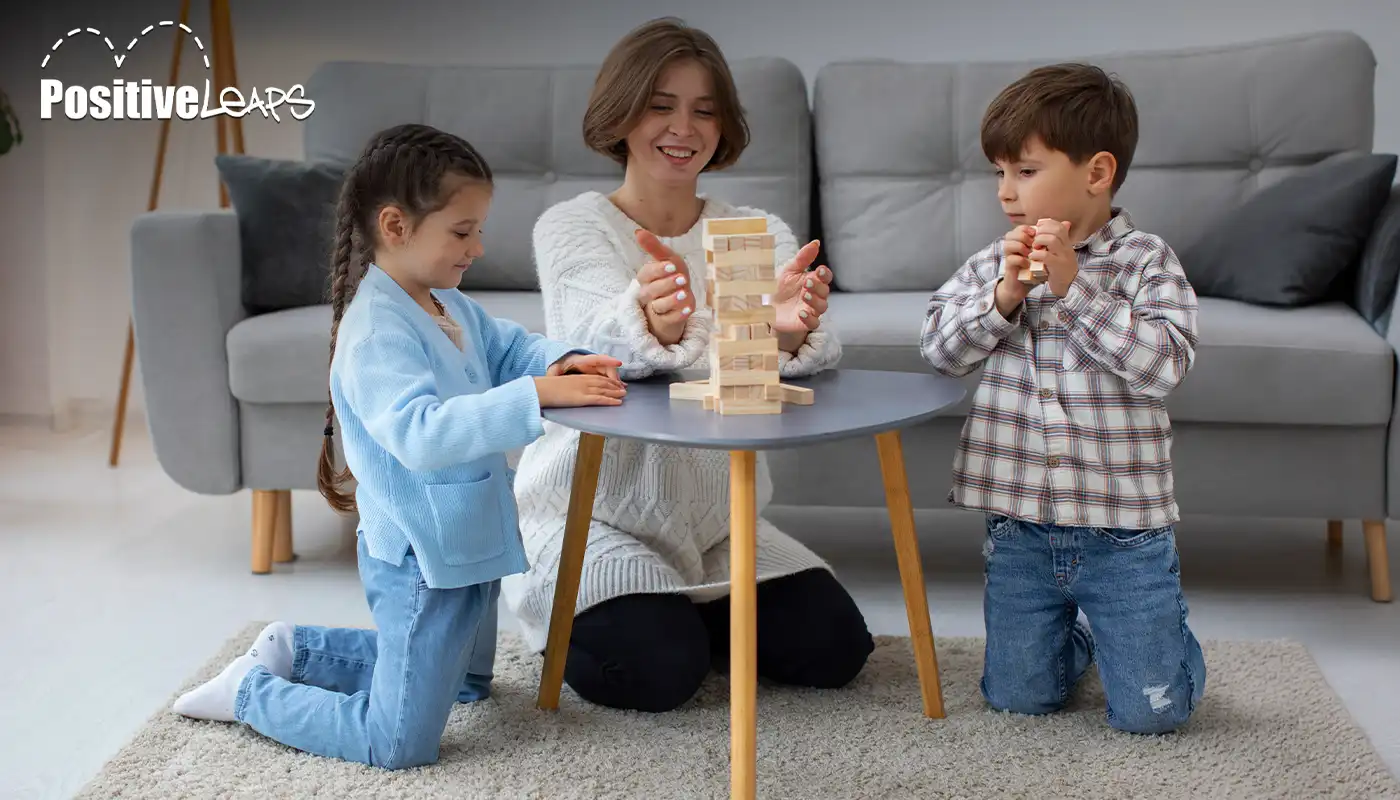
Your child wants to do a puzzle, but their toys are scattered across the living-room rug. “Let’s put these away first,” you say. “I don’t want to!” they answer. It’s Saturday afternoon, and a chance to play together is turning into another argument.
You’ve had this argument several times this week. Picking everything up yourself would be quicker, but you want your child to help. Threatening to take the toys away might get a response, but you don’t want that to be the only way they listen.
So which works better, positive reinforcement or punishment? How do you handle the refusal in front of you while doing what’s best for your child? In this blog, we’ll answer these questions, explain what each approach can teach, and show you how to respond when your child still struggles.
What Is Positive Reinforcement?
Positive reinforcement means following a behavior with something your child values, making them more likely to repeat it. That might be a reward, your attention, or a sincere thank-you.
If your child finally starts putting toys in the box, you may be thinking they should have done it ten minutes ago. Even so, “Thanks for helping me put these away” recognizes the cooperation you wanted. You haven’t forgotten the argument. You’ve noticed the part worth repeating. This is why specific praise gives a child more useful information than a general “Good job.”
What Is Punishment?
Punishment, or negative reinforcement, focuses on reducing behavior. In behavioral terms, a consequence counts as punishment when the behavior happens less often afterward. Examples include losing a privilege or a brief, age-appropriate time-out.
Suppose your child throws a toy, then asks for it back. You put that toy away for the rest of the afternoon. They lose a chance to play with something they want. If that consequence reduces throwing, it is working as punishment. It doesn’t require yelling, humiliation, or staying angry with your child.
Positive Reinforcement vs. Punishment in the Same Situation
During the cleanup argument, suppose your child throws a toy. You want the throwing to stop, but you also want them to handle disappointment differently. Punishment and reinforcement address those different goals.
Keeping the thrown toy unavailable for the rest of the afternoon gives throwing a consequence. The loss alone, however, doesn’t show your child what to do with their frustration.
Reinforcement focuses on the handling part. When you’re both calm, show your child how to put a toy down and explain that they can tell you they don’t want to tidy up. Later, when they do that instead of throwing, listen and thank them for putting it down carefully. The consequence discourages throwing; the reinforcement encourages a safer way to show their disappointment.
Which Works Better for Children’s Behavior?
For learning cooperation, reinforcement is the better starting point. Appropriate consequences can discourage unwanted behavior, but they cannot replace showing your child what to do. You don’t have to choose between praising everything and punishing everything.
Progress may look less impressive than you hoped. Your child might pick up the toys while complaining that cleanup is boring. They’re still doing the task. Over time, look for fewer reminders, less throwing, or more requests for help, rather than expecting them to become cheerful about a job they dislike.
Why Your Response Matters in the Moment
You may be watching how much is left on the rug, eager to get past the argument. But notice when your child starts helping, too. Thanking them as they put a toy away connects your appreciation to that action. You don’t have to wait until the rug is clear to acknowledge a useful first step.
A simple “Thanks for putting those away” is enough. Adding “Why couldn’t you do that the first time?” brings the conversation back to what went wrong. Saving a vague “You were good today” at bedtime makes the connection less clear.
Positive Reinforcement Examples for Everyday Problems
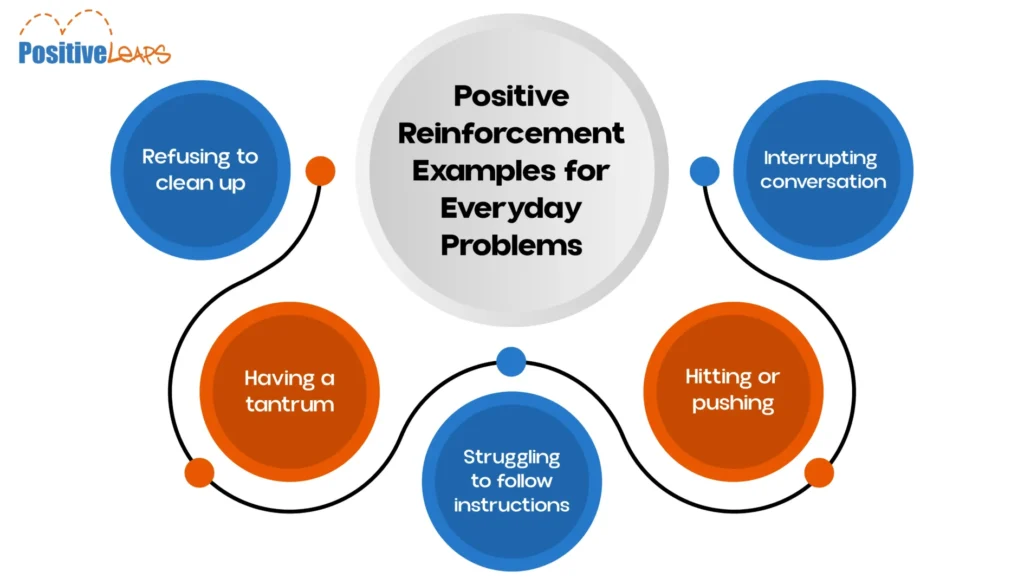
Encouragement is easier when your child has already begun cooperating. A child who doesn’t know where to start needs different help from one who is too upset to listen.
Refusing to clean up
Your child may need help getting started. Put one toy in the box and ask them to add another. Thank them if they join in.
If they understand but still refuse, say, “We need space for the puzzle. I’ll help you put these away.” Keep the puzzle closed while you offer help with that first toy. If they still say no, pause rather than argue; the puzzle can wait. When they join in, thank them. Once the space is clear, open the puzzle together. Cleanup has made the activity they wanted possible.
Having a tantrum
When your child is crying too hard to listen, another cleanup reminder is unlikely to help them begin. Stay nearby, make sure nothing is unsafe, and offer comfort if they want it. You don’t need to make stopping the tears another condition they must meet.
Once they can respond, offer to help put the toys away. If they ask for help, help them. If they begin tidying, appreciate them. Encourage those actions, even if tears remain. For more details, you can check our guide on emotional-outbursts that explains the calming stage.
Struggling to follow instructions
Long instructions can leave your child unsure where to start. Point to one toy and say, “Put this in the box, please.” Give them time to respond, then thank them before asking them to put away another toy. If they’re crying too hard to listen, help them settle first. Adding “Stop crying” won’t make the cleanup instruction clearer.
Hitting or pushing
If your child hits your arm when you ask them to tidy up, you may feel like shouting back. In times like these, you must remain calm. Pause the cleanup and say firmly, “That hurts. You can be angry, but you can’t hit me.” If they try again, step back to avoid another hit while staying nearby.
Once they’re calm, explain that they can tell you they don’t want to tidy up. Next time they use words, listen and offer help. You’re encouraging them to express frustration without hurting someone, not letting them skip cleanup. Our aggression guide offers further help.
Interrupting a conversation
Waiting for attention takes practice too. During a nonurgent phone call, you might say, “Give me a second,” then finish your thought and pause the call. Turn to your child. “Thanks for waiting. What did you want to tell me?”
Listening is part of the lesson. It shows that waiting briefly gets them heard. Repeating “In a minute” while continuing the call gives them little experience of that working. Urgent needs should not wait.
How to Make Reinforcement Part of Your Routine
Start with one goal, such as putting the toys in the box with help. Agree with other caregivers that this counts as completing cleanup, even with reminders. Each adult can then thank your child for the same effort rather than expecting something different.
Your appreciation may be enough for encouragement. If you want to add a reward, choose something your child enjoys, such as a shared game or a sticker. Suppose you choose stickers. Explain before play that helping put the toys away earns one, then give it when they finish.
They earned that sticker by cleaning up. Taking it back after a difficult bedtime changes the agreement after they’ve fulfilled it. Address bedtime separately.
If cleanup isn’t getting easier, check whether the task is manageable and the reward still interests your child. Once the routine is established, you might agree to give a sticker every other cleanup instead of every time. Explain that change before trying it, keep earned stickers, and continue thanking them.
When Are Consequences Appropriate?
Encouraging cooperation doesn’t mean overlooking behavior that hurts someone, damages things, or breaks a clear rule your child can follow. For the thrown toy, a related response could be, “You threw this, so I’m putting it away for the rest of the afternoon.” Other toys remain available, and the puzzle can go ahead once cleanup is finished.
Adding a week without screens may feel more decisive, but it can shift the argument from throwing to the extra punishment. It may also be difficult to carry out. Keep the consequence related and manageable, without enlarging it at every protest. Meals and other basic needs must never depend on cooperation.
Discipline Strategies to Avoid
Spanking, hitting, screaming, humiliation, and extreme threats are not useful substitutes for teaching. Harsh physical and verbal discipline is linked to more behavior and mental-health difficulties. Calling your child “bad” also gives them no guidance about the next disagreement.
If you shouted over the toys, you can acknowledge it once you’re calm. “I’m sorry I yelled. I was frustrated, but I shouldn’t have shouted at you.” The toys still needed to go away. Taking responsibility for your response doesn’t mean the original request was wrong.
How Should Discipline Change With Age?
What children can reasonably manage changes as they grow. A toddler or preschooler may need you beside them, showing them how to put away one toy at a time. Recognize that small contributions are more realistic than expecting them to clean up the entire room independently.
School-age children can take more ownership by helping decide where their things belong or when to clean up. Notice when they follow the plan with fewer reminders and acknowledge that progress.
With tweens and teens, involve them in conversations about responsibilities and privileges. A simple “Thanks for getting that done” may be more appropriate than a reward chart. The need for appreciation doesn’t disappear with age; the way you show it can change.
When to Seek Professional Support
An occasional argument is different from a pattern that keeps making family life difficult. If your child’s behavior happens often, feels unusually intense for their age, involves aggression or destruction, or begins affecting school, friendships, or daily routines, it may be time to ask for support.
You don’t have to wait until the behavior becomes more difficult or keep trying bigger rewards and punishments on your own. A professional can help you understand what may be contributing to the behavior and find strategies that fit your child and your family.
For ongoing concerns, Positive Leaps offers child and teen therapy, including parenting guidance. Getting support can help you respond more consistently and give your child opportunities to learn new ways of handling frustration and difficult situations.
Make the Next Cleanup Easier to Begin
For building cooperation, start with teaching and positive reinforcement. Appropriate consequences can address unwanted behavior, but they don’t replace practice. On the living-room rug, that means helping clear space, noticing your child’s effort, and then getting the puzzle out. They can learn to cooperate even when cleanup feels frustrating.
If these struggles keep disrupting family life, contact Positive Leaps to discuss your concerns and ask about support.