

Your child is happily watching a favorite show or playing on a tablet when you announce that screen time is over. Suddenly, the tears start, frustration takes over, and a simple request to put the device away turns into a meltdown.
If this sounds familiar, you’re not alone. Transitions away from screens can be challenging for young children who are still learning to manage frustration, disappointment, and big emotions.
A 2021 study by researchers at Brigham Young University and Iowa State University, published in Computers in Human Behavior, found an association between using media to regulate toddlers’ emotions and more intense emotional reactions when media was removed.
The good news is that parents can make these transitions easier with predictable routines, clear boundaries, and supportive strategies. Understanding why these meltdowns happen is the first step toward helping your child manage screen time transitions with less frustration.
Why Do Children Have Meltdowns When Screen Time Ends?
Children can react strongly when screen time ends for several reasons. Their attachment to an enjoyable activity, developing emotional regulation skills, and reliance on screens for comfort can all make these transitions difficult.
Screens Are Highly Engaging
Children can become deeply absorbed in videos and games, making it difficult to stop when screen time ends. Unlike many everyday activities, digital content provides continuous entertainment and stimulation. When parents interrupt that experience, children may become frustrated because they are being asked to leave something enjoyable before they are ready.
Children Are Still Developing Emotional Regulation
Young children are still learning how to manage disappointment, frustration, and impulsive reactions. They may understand that screen time is over but struggle to control their response. This is why a simple request to turn off a tablet can lead to crying, shouting, or refusing to cooperate. Understanding a boundary and having the emotional skills to accept it are two different things.
Screens Can Become a Way to Manage Difficult Feelings
Some children turn to screens when they feel bored, frustrated, or overwhelmed. If parents regularly use a tablet or television to calm an upset child, the child may begin relying on it to manage difficult emotions.
A 2021 study by researchers at Brigham Young University and Iowa State University examined 269 toddlers aged 2–3. It found that using media to regulate children’s emotions was associated with more problematic media use and stronger emotional reactions when devices were removed. This suggests that relying on screens for emotional comfort may make it harder for some children to manage frustration without them.
How Common Are Tantrums in Young Children?
Tantrums are a common part of early childhood, but their frequency can provide useful context for parents. A 2012 study led by researchers at Northwestern University, involving approximately 1,500 children aged 3–5, found that 83.7% experienced occasional tantrums, while 8.6% had them daily.
These findings help put occasional meltdowns into perspective. A child crying when a tablet is turned off does not automatically have a behavioral problem. However, frequent or intense outbursts, particularly when they interfere with everyday activities, may indicate that a child needs additional support.
7 Ways to Help Your Child Transition Away From Screen Time
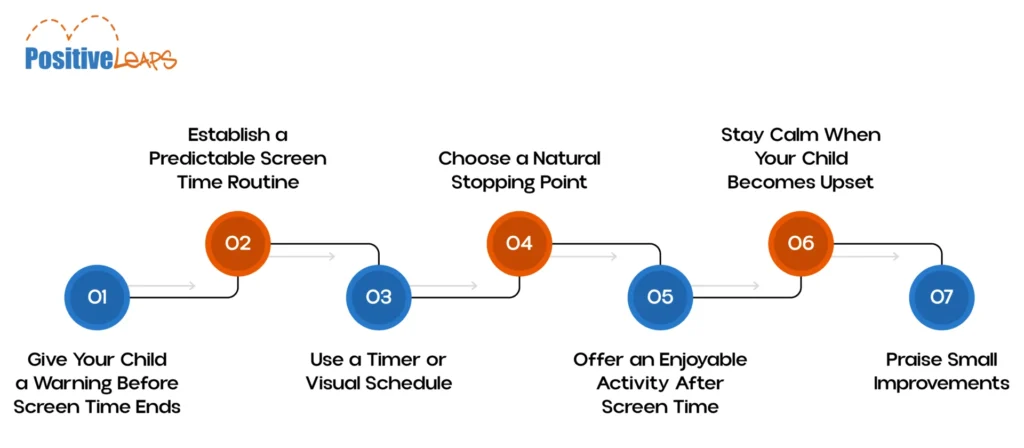
Helping your child stop using a device doesn’t have to end in an argument every time. A few consistent strategies can make transitions more predictable and help children gradually develop better responses to boundaries.
1. Give Your Child a Warning Before Screen Time Ends
Avoid switching off a device without warning. Give your child a five-minute reminder followed by another reminder when one minute remains. This gives them time to prepare for the change rather than feeling that their activity has been taken away suddenly.
2. Establish a Predictable Screen Time Routine
Set consistent screen time limits and stick to them. For example, your child might watch a favorite show after lunch or use a tablet for a set period in the afternoon. When children know when screen time starts and ends, they have clearer expectations and fewer surprises.
3. Use a Timer or Visual Schedule
A visual timer can help children understand how much screen time they have left. Let your child help set the timer before starting a show or game. For younger children who cannot read a clock, a visual countdown can make the approaching transition easier to understand.
4. Choose a Natural Stopping Point
Whenever possible, let your child finish an episode, complete a level, or reach a suitable stopping point in a game. Interrupting an activity at its most exciting moment can increase frustration. However, set the time limit beforehand so finishing an episode doesn’t become a reason to repeatedly extend screen time.
5. Offer an Enjoyable Activity After Screen Time
Give your child something positive to look forward to once the device is turned off. Suggest drawing, playing with building blocks, reading a favorite book, or spending time outdoors. Offering two simple choices, such as drawing or playing with toys, can also help children feel involved in the transition.
6. Stay Calm When Your Child Becomes Upset
Your child may still cry or protest even when you follow a consistent routine. Acknowledge their feelings without changing the boundary. You might say, “I know you want to keep watching, but screen time is over. Let’s find something else to do.” Avoid shouting or negotiating while your child is having a meltdown.
7. Praise Small Improvements
Recognize when your child turns off a device with less resistance, follows a reminder, or calmly moves on to another activity. Simple encouragement, such as “You did a great job turning off your tablet when the timer went off,” reinforces positive behavior. Focus on gradual progress rather than expecting every transition to go smoothly.
The American Academy of Pediatrics recommends creating consistent family media routines, setting clear boundaries, and involving children in age-appropriate media planning. These habits can help make screen time easier for the entire family to manage.
What Should You Do During a Screen Time Meltdown?
Even with consistent routines and clear boundaries, your child may still become upset when screen time ends. When this happens, focus on helping them manage their emotions rather than trying to stop the crying immediately.
Start by staying calm and acknowledging their frustration. Let your child know you understand they wanted more time, but avoid turning it into an argument. You can say, “I know you wanted to keep watching, but screen time is over. It’s okay to feel upset.“
If your child is overwhelmed, give them time to calm down in a safe environment. Avoid shouting, threatening consequences, or offering extra screen time just to end the meltdown.
Once your child has settled, briefly talk about what happened and remind them what to expect next time. These conversations help children gradually understand boundaries and develop healthier ways to respond to disappointment.
When Are Screen Time Tantrums a Sign of a Bigger Concern?
Occasional frustration when a device is taken away is common in young children. However, parents should pay attention when these reactions become frequent, intense, or difficult to manage.
Consider seeking professional guidance if your child:
- Has severe meltdowns almost every time screen time ends.
- Frequently hits, kicks, or throws objects when frustrated.
- Struggles to calm down without access to a screen.
- Has emotional outbursts that interfere with sleep, meals, school, or family activities.
- Finds it difficult to transition between other everyday activities, not just screen time.
The frequency, duration, and intensity of these behaviors matter more than a single tantrum. A 2012 study led by researchers at Northwestern University found that daily tantrums were much less common than occasional ones, with 8.6% of preschoolers experiencing them daily.
These behaviors do not automatically mean your child has a behavioral or developmental condition. However, if emotional outbursts regularly disrupt daily life, speak with your child’s pediatrician or a qualified child behavioral health professional. Early support can help identify what your child is struggling with and develop strategies to manage those challenges.
How Can Behavioral Therapy Help Children Manage Big Emotions?
Some children need additional support to develop emotional regulation and handle everyday transitions. Behavioral therapy can help children understand their emotions, manage frustration, and develop healthier responses to challenging situations.
Through age-appropriate activities and structured support, children can practice skills such as communicating their feelings, following routines, handling disappointment, and moving between activities with less resistance.
Parents also play an important role in this process. Behavioral therapy can help caregivers understand what triggers challenging behaviors and learn practical ways to reinforce positive responses at home.
At Positive Leaps, our Specialized Day Treatment Programs provide structured support for children who need help developing emotional, behavioral, and social skills. Through individualized treatment and family involvement, we help children build practical skills they can use at home, school, and in everyday situations.
Final Thoughts
Screen time meltdowns are a common challenge in early childhood, but consistent routines, clear boundaries, and patience can help children manage these transitions more easily. With practice and support, children can gradually learn to handle frustration and move on to other activities.
If your child continues to struggle with emotional outbursts or everyday transitions, professional support may help. Positive Leaps offers child therapy in Cincinnati, Ohio, along with Specialized Day Treatment Programs for children who need more structured support. Our team works with children and families to build emotional, behavioral, and social skills that support progress at home, at school, and in everyday life.