
Some mornings, getting your child ready for school feels like a battle. Then, later in the day, you receive a phone call from their teacher about refusing to follow directions, disrupting the class, arguing with classmates, or having another emotional outburst. As a parent, it’s natural to wonder, “Why does this keep happening?” or “What can I do to help my child?”
If this sounds familiar, you’re not alone. In many cases, challenging behaviors are a sign that your child is having difficulty expressing their emotions, managing their feelings, or coping with challenges at school or home. Instead of seeing the behavior as the problem, it’s important to understand what may be causing it.
The good news is that behavior can improve with the right support. When you understand what’s driving your child’s actions, you’re better equipped to respond with patience, consistency, and strategies that encourage positive change. In this guide, you’ll learn what may be causing your child’s behavior problems, practical ways to support them at home and school, and when it may be time to seek professional help.
Understanding the Reasons Behind Your Child’s Behavior at School
Children don’t always have the words or emotional skills to explain what they’re feeling. Instead, they may express frustration, anxiety, sadness, confusion, or overwhelm through their behavior. Understanding what’s driving these behaviors is one of the most important steps toward helping your child make positive changes.
In many cases, several factors may be contributing at the same time. Some of the most common reasons include:
- Emotional challenges: Anxiety, stress, or depression can make it difficult for children to concentrate, follow directions, and regulate their emotions. What looks like defiance may actually be a sign that they’re feeling overwhelmed.
- Learning differences: Children who struggle academically may become frustrated when schoolwork feels too difficult. Instead of asking for help, they may avoid tasks, disengage from class, or act out.
- Family changes or stressful life events: Experiences such as divorce, moving, financial stress, illness, or the arrival of a new sibling can affect a child’s emotional well-being and influence their behavior at school.
- Friendship or social challenges: Bullying, conflicts with classmates, or feeling excluded can leave children feeling frustrated, anxious, or isolated, which may show up through challenging behaviors.
Remember, understanding the reason behind your child’s behavior doesn’t mean excusing it. It helps you respond in ways that address the underlying cause instead of only reacting to the behavior itself.
5 Effective Ways to Help Your Child Improve Their Behavior at School
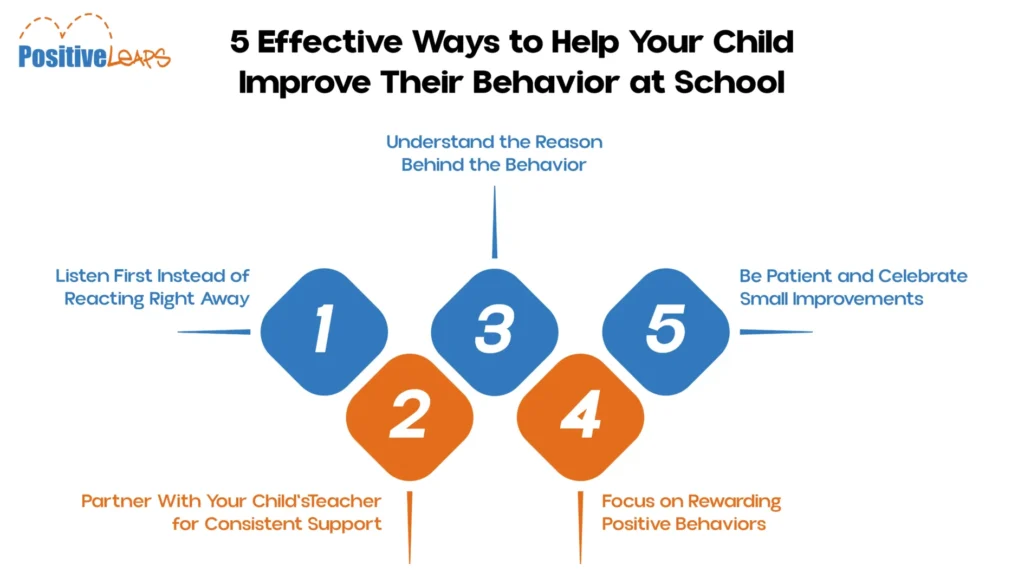
Helping your child overcome behavior problems at school takes time, consistency, and teamwork. While there’s no quick fix, small changes in how you respond and support your child can make a meaningful difference over time. The following strategies can help you better understand your child’s needs, encourage positive behavior, and create a stronger partnership between home and school.
Listen First Instead of Reacting Right Away
When you hear that your child got into trouble at school, it’s natural to feel frustrated or disappointed. However, reacting with anger or immediately handing out consequences can make it harder for your child to open up about what really happened.
Instead, start by listening. Ask open-ended questions like, “Can you tell me what happened?”, “How were you feeling?”, or “What do you think made that situation difficult?” Give your child time to share their perspective without interrupting or judging them.
Listening doesn’t mean excusing inappropriate behavior. It helps you understand what may have triggered the situation so you can respond more effectively. When children feel heard, they’re often more willing to talk about their emotions, accept guidance, and work with you to find better ways to handle similar situations in the future.
Partner With Your Child’s Teacher for Consistent Support
Your child’s teacher spends several hours with them each day and may notice patterns that aren’t always visible at home. Instead of viewing the school as simply reporting problems, think of your child’s teacher as a partner who shares the same goal of helping your child succeed.
Schedule regular check-ins to discuss what’s happening in the classroom. Ask questions about when the behaviors occur, what seems to trigger them, and what strategies have been effective. Likewise, share any changes at home or insights that may help the teacher better understand your child’s needs.
When parents and teachers communicate openly and respond consistently, children receive the same expectations and messages in both environments. This consistency helps reduce confusion, reinforces positive behaviors, and gives your child the structure they need to make lasting progress.
Understand the Reason Behind the Behavior
Children’s behavior doesn’t happen in isolation; it’s often a response to something they’re experiencing emotionally, socially, or academically. Before deciding how to address the behavior, take a step back and ask yourself, “What is my child trying to communicate?” Looking beyond the behavior can help you respond more effectively and prevent the same issues from happening again.
Pay attention to patterns. Does the behavior happen before a particular class? After a disagreement with a classmate? During homework time? Keeping track of when and where the behavior occurs can help you identify possible triggers. You can also talk with your child and their teacher to better understand what may be contributing to the problem.
Once you identify the underlying cause, you can choose strategies that address the root of the issue instead of simply reacting to the behavior. Whether your child needs emotional support, additional academic help, clearer expectations, or better coping skills, understanding why the behavior is happening is the first step toward creating lasting, positive change.
Focus on Rewarding Positive Behaviors
When a child is struggling with behavior at school, it’s easy to spend most of your time correcting mistakes. While addressing inappropriate behavior is important, children also need to know when they’re doing something right. Recognizing and reinforcing positive behaviors encourages them to repeat those actions in the future.
Look for opportunities to praise the behaviors you want to see more often, even if they’re small. For example, acknowledge when your child follows directions, completes homework without being reminded, uses kind words, or handles a frustrating situation calmly. Specific praise such as, “I noticed how patiently you waited your turn today,” is often more meaningful than a simple, “Good job.”
Positive reinforcement doesn’t have to involve expensive rewards. Extra playtime, choosing a family activity, earning stickers toward a goal, or simply spending one-on-one time together can be powerful motivators that help shift the focus from punishment to growth. .
Be Patient and Celebrate Small Improvements
Changing behavior doesn’t happen overnight. Just like learning to read or ride a bike, developing self-control, emotional regulation, and positive social skills takes time. There will be good days and challenging days, and setbacks are a normal part of the learning process.
Instead of expecting immediate results, focus on the small signs of progress. Maybe your child had fewer disruptions in class this week, remembered to use their coping strategies, or handled a disagreement more calmly than before. Recognizing these small wins helps build your child’s confidence and reinforces the behaviors you want to encourage.
Most importantly, let your child know that your support isn’t based on perfect behavior. When children feel understood, encouraged, and loved as they work through challenges, they’re more likely to stay motivated and continue making positive changes. With patience, consistency, and ongoing support, even small improvements can lead to meaningful, lasting progress over time.
What to Avoid When Addressing Behavior Problems at School
When you’re worried about your child’s behavior, it’s natural to react out of frustration or concern. However, certain responses can unintentionally make the situation more difficult. Avoiding these common mistakes can help create a more supportive environment where your child feels safe to learn and grow.
- Yelling or relying on harsh punishment: While it may stop the behavior temporarily, it doesn’t teach your child how to manage their emotions or make better choices. Instead, focus on calm, consistent consequences that help them learn from the situation.
- Labeling your child as “bad” or “difficult”: Children often internalize the labels they’re given. Rather than criticizing who they are, address the specific behavior and reinforce that they are capable of making better choices.
- Comparing your child to siblings or classmates: Statements like, “Why can’t you behave like your brother?” can damage your child’s self-esteem and create resentment. Every child develops at their own pace and responds to support differently.
- Ignoring the emotions behind the behavior: Challenging behaviors often stem from frustration, anxiety, stress, or other unmet needs. Taking time to understand what your child is experiencing can lead to more effective solutions than simply correcting the behavior.
- Sending mixed messages between home and school: Children benefit from consistency. When parents and teachers have different expectations or respond to behaviors in different ways, it can be confusing for the child. Regular communication and shared goals help create a more consistent and supportive approach.
When Should You Seek Professional Help?
It’s normal for children to have occasional behavioral challenges as they grow and learn. However, if these behaviors persist, become more severe, or affect your child’s daily life, it may be time to seek professional support. Early intervention can help identify the underlying causes and provide your child with the tools they need to succeed at home, at school, and in their relationships.
Consider reaching out to a mental health professional if your child:
- Continues to experience behavior problems at school despite consistent support at home and in the classroom.
- Frequently receives disciplinary referrals, detentions, suspensions, or is repeatedly sent out of class.
- Shows aggressive behaviors toward classmates, teachers, siblings, or other family members.
- Has intense emotional outbursts that seem difficult to manage or happen regularly.
- Appears anxious, withdrawn, or persistently sad, or shows other signs of anxiety or depression.
- Is struggling academically or having difficulty building and maintaining friendships because of their behavior.
Final Thoughts
Behavior problems at school can be frustrating, but they don’t define your child. In many cases, challenging behaviors are a sign that your child needs understanding, guidance, and the right support rather than punishment. By identifying the underlying cause and responding with patience and consistency, you can help your child build the skills they need to succeed at school and beyond.
If these challenges continue despite your efforts, don’t hesitate to seek professional support. Early intervention can make a meaningful difference, and with the right guidance, your child can develop healthier behaviors, stronger relationships, and greater confidence.